

A Turkey student visa allows foreign nationals to enter Turkiye for academic study at a Turkish university or educational institution. Unlike the eVisa system used for tourism and commerce, a student visa must be obtained in person at a Turkish embassy or consulate before arrival. Once in Turkiye, students must also obtain a student residence permit to remain legally for the duration of their studies.
What Is a Turkey Student Visa?
A Turkey student visa (also called a “Student Visa” or labeled “Purpose: Study” on the sticker) is an official travel authorization issued by a Turkish embassy or consulate that permits foreign nationals to enter Turkiye for the purpose of enrolling in a recognized educational institution. It is a sticker visa stamped into the applicant’s passport – not an electronic visa.
Key characteristics of the Turkey student visa:
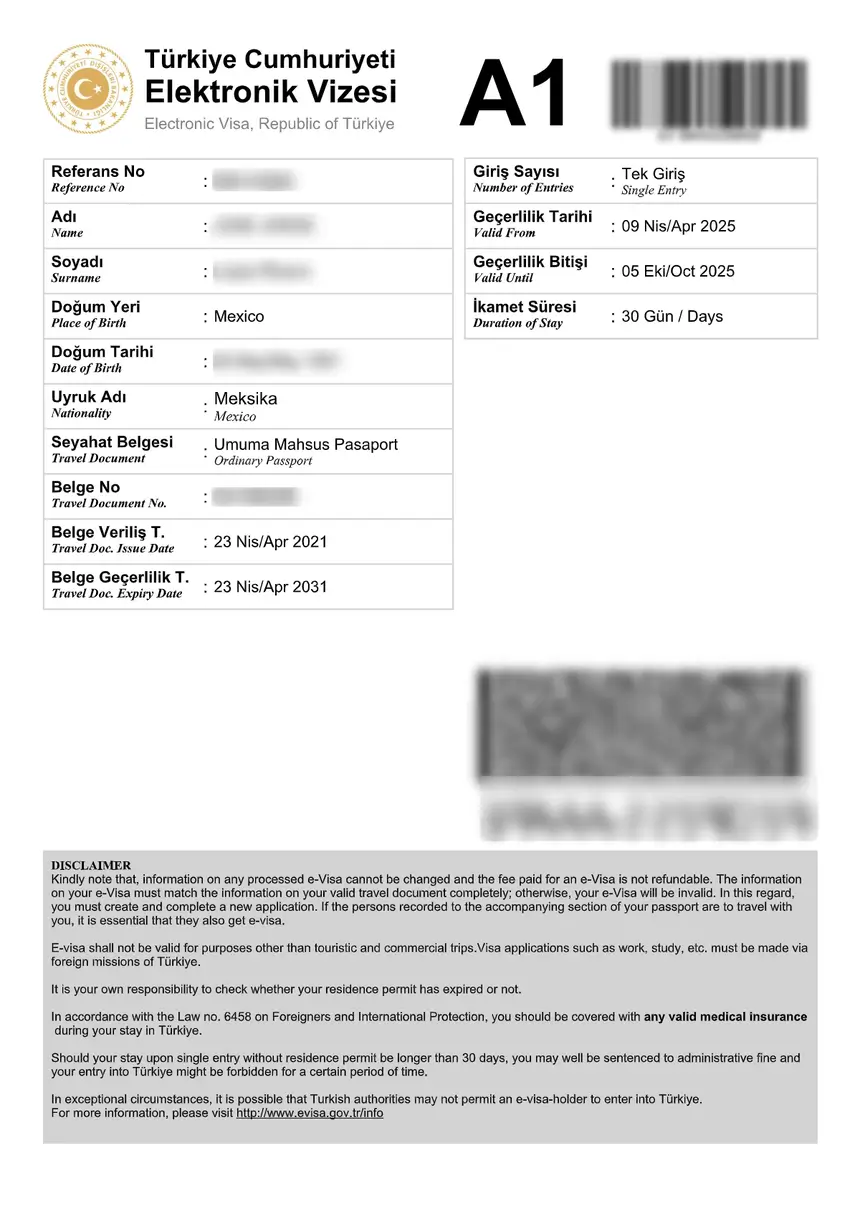
- Cannot be obtained online – the eVisa at evisa.gov.tr is valid only for tourism and commerce. Students cannot use the eVisa system.
- Valid for a single entry – the initial student visa typically allows one entry into Turkiye, after which the student must apply for a student residence permit.
- Issued by embassies and consulates – applications are submitted at the nearest Turkish diplomatic mission in the applicant’s home country or country of legal residence.
- Linked to a specific institution – the visa is granted on the basis of an acceptance letter or enrollment confirmation from a Turkish university or school.
The student visa is distinct from the student residence permit. The visa gets you into Turkiye; the residence permit lets you stay. Both are required for international students planning to study for more than 90 days.
Who Needs a Turkey Student Visa?
All foreign nationals who intend to study at a Turkish educational institution need a student visa, regardless of whether their country of citizenship is visa-exempt for tourism. Visa-exempt nationalities (such as German, French, or Brazilian citizens) can enter Turkiye without a visa for short touristic stays, but must still obtain a student visa before enrolling in a full-time academic program.
| Situation | Student Visa Required? | Notes |
|---|---|---|
| Full-time university degree program | Yes | Must apply at embassy before travel |
| Short-term exchange or summer program under 90 days | Depends on nationality | Visa-exempt nationals may not need one |
| Turkish language course (short-term) | Check with consulate | May qualify under tourist eVisa if under 90 days |
| Primary or secondary school enrollment | Yes | Required for students over 18 in secondary education |
| Online/distance learning from abroad | No | No physical presence in Turkiye required |
United States citizens need a student visa for any academic program in Turkiye, even though they can obtain a tourist eVisa online. The student visa must be obtained from the Turkish embassy or consulate in the United States.
Indian citizens also need a student visa and must apply at the Turkish Embassy in New Delhi or the Consulate General in Mumbai.
Nigerian, Pakistani, and Bangladeshi citizens require a student visa and should apply well in advance, as processing times may be longer due to additional document verification requirements.
Turkey Student Visa Requirements
To apply for a Turkey student visa, applicants must provide the following documents at the Turkish embassy or consulate:
1. Valid Passport
Your passport must be valid for at least 60 days beyond the intended period of stay. It is recommended to have at least one year of remaining validity to avoid complications with the residence permit application later.
2. Acceptance Letter or Enrollment Confirmation
An official letter from a Turkish university or educational institution confirming your admission. The letter should include:
– Your full name
– The program of study
– The expected duration of studies
– The institution’s official stamp and authorized signature
3. Completed Visa Application Form
The application form can be filled out online through the Turkish government’s Pre-Application System for Sticker Visa at visa.gov.tr, or obtained directly from the embassy.
4. Passport-Sized Photographs
Two recent biometric photographs (5 cm × 6 cm) with a white background, taken within the last six months.
5. Proof of Financial Means
Evidence that you can support yourself financially during your studies. This may include:
– Bank statements from the last three months
– A scholarship letter (if applicable)
– A notarized letter of financial sponsorship from a parent or guardian
– Proof of a student loan or financial aid package
The minimum financial threshold is approximately $500 USD per month of stay, though this may vary by consulate.
6. Health Insurance
Proof of valid health insurance that covers the duration of your stay in Turkiye. Students can obtain Turkish public health insurance (SGK) through their university after arrival, but the embassy may require proof of coverage at the time of visa application.
7. Visa Fee Payment
The student visa fee varies by nationality and consulate, but is typically between $50 and $100 USD. Payment methods and accepted currencies differ by location – contact your local Turkish embassy for exact fees.
8. Previously Obtained Turkish Visa (if applicable)
If you have held a Turkish visa before, include a photocopy of the previous visa or residence permit.
How to Apply for a Turkey Student Visa
The application process involves visiting a Turkish embassy or consulate in person. There is no fully online option for student visas.
Step 1: Secure Admission to a Turkish Institution
Before applying for a visa, you must receive an official acceptance or enrollment letter from a recognized Turkish university or school. Popular institutions include Istanbul University, Middle East Technical University (METU), Boğaziçi University, and Koç University. You can explore programs and apply through the official Study in Turkey portal operated by the Turkish government.
Step 2: Gather Required Documents
Collect all the documents listed in the requirements section above. Ensure that any documents not in Turkish or English are accompanied by a sworn translation.
Step 3: Complete the Online Pre-Application
Visit visa.gov.tr to complete the online pre-application form. Select “Student” as the visa purpose. The system will generate an appointment date and a checklist of required documents.
Step 4: Attend Your Embassy Appointment
Appear at the Turkish embassy or consulate on your scheduled date with all original documents and photocopies. Biometric data (fingerprints) may be collected at this stage.
Step 5: Wait for Processing
Student visa processing typically takes 5 to 15 business days, but can take up to 30 days during peak application seasons (July-September). Some consulates offer expedited processing for an additional fee.
Step 6: Collect Your Visa
Return to the embassy or consulate to collect your passport with the student visa sticker, or arrange for courier delivery if available.
Important: Once you arrive in Turkiye with a student visa, you must apply for a student residence permit within 30 days at the Provincial Directorate of Migration Management (Göç İdaresi) in your city of study.
Student Residence Permit in Turkiye
The student visa alone does not authorize an extended stay. For studies lasting longer than 90 days, every international student must obtain a Student Residence Permit (Öğrenci İkamet İzni), regulated under Articles 38-41 of the Law on Foreigners and International Protection No. 6458.
Key details about the student residence permit:
| Aspect | Details |
|---|---|
| Validity | Up to 1 year per application, renewable annually |
| Renewal window | Apply up to 60 days before expiration |
| Application method | Online via e-ikamet.goc.gov.tr, then in-person at migration office |
| Processing time | 2-8 weeks depending on the province |
| Required documents | Passport, student visa, enrollment certificate, health insurance, proof of address, biometric photos |
| Work permission | Student residence permit holders may work part-time (up to 24 hours/week) after their first year of study, with a work permit |
Health insurance is mandatory throughout your stay. International students enrolled in associate, undergraduate, or graduate programs at Turkish higher education institutions are eligible for SGK (Sosyal Güvenlik Kurumu) public health insurance through their university.
Students who fail to renew their residence permit before it expires face fines, deportation, and potential re-entry bans. It is critical to track your permit expiration date and begin the renewal process early.
Turkey Student Visa vs Other Visa Types
Understanding how the student visa compares to other Turkish visa categories helps clarify when it is required:
| Feature | Student Visa | Tourist eVisa | Work Visa |
|---|---|---|---|
| Purpose | Academic study | Tourism and commerce | Employment |
| Application method | Embassy/consulate only | Online at evisa.gov.tr | Embassy/consulate only |
| Processing time | 5-15 business days | Minutes online | 5-30 business days |
| Validity | Single entry, convert to residence permit | 180 days, multiple entry | Single entry, convert to work permit |
| Can study? | Yes | No | No (separate permit needed) |
| Can work? | Limited (after first year) | No | Yes |
| Duration of stay | Up to 1 year (renewable) | Up to 90 days | Per contract, renewable |
The tourist eVisa cannot be used for study. If you enter Turkiye on a tourist eVisa and enroll in a university, you are in violation of your visa terms. You must leave Turkiye, apply for a student visa at a Turkish embassy abroad, and re-enter with the correct visa type.
Turkey Student Visa Fees
Student visa fees vary depending on the applicant’s nationality and the specific Turkish consulate. Here is a general overview:
| Nationality | Approximate Fee (USD) | Notes |
|---|---|---|
| United States | $50-$65 | Paid at the consulate, check for exact amount |
| United Kingdom | £50-£65 | Converted to local currency at payment |
| India | ₹4,000-₹6,000 | Fee in INR equivalent of USD amount |
| Nigeria | $50-$100 | Additional service center fees may apply |
| Pakistan | $50-$80 | Paid in PKR equivalent |
These fees cover only the visa application. Additional costs students should budget for include:
- Document translation and notarization: $20-$100 per document
- Residence permit fee: Approximately $50-$80 USD per year
- Health insurance (SGK): Approximately $300-$500 per year through the university
- Biometric residence permit card fee: Included in the residence permit fee
FAQs About Turkey Student Visa
Can I apply for a Turkey student visa online?
No. The Turkey student visa cannot be obtained online. The eVisa system at evisa.gov.tr is strictly for tourism and commerce purposes. Student visas must be applied for in person at a Turkish embassy or consulate. You can, however, start the pre-application form online at visa.gov.tr.
How long does it take to get a Turkey student visa?
Processing typically takes 5 to 15 business days, though it can take up to 30 days during peak application periods (July through September). Apply at least 6 to 8 weeks before your program start date to allow sufficient time.
Can I work in Turkey on a student visa?
Student residence permit holders may work part-time (up to 24 hours per week) after completing their first year of study, provided they obtain a work permit. Freshmen are not eligible to work during their first academic year.
Do I need a student visa if I am visa-exempt for tourism?
Yes. Even citizens of visa-exempt countries (such as Germany, France, or Brazil) must obtain a student visa before enrolling in a full-time academic program in Turkiye. The visa exemption only applies to touristic visits of up to 90 days.
Can I extend my Turkey student visa?
The student visa itself cannot be extended. However, once in Turkiye, you apply for a student residence permit which is valid for up to 1 year and renewable annually for the duration of your studies. Begin the renewal process at least 60 days before your permit expires.
What happens if I overstay my Turkey student visa?
Overstaying your authorized period can result in fines, deportation, and a ban from re-entering Turkiye. The severity depends on the length of overstay. Always ensure your residence permit is valid and renewed on time.
Can my family accompany me to Turkey on a student visa?
Your family members cannot use your student visa. They would need to apply for their own visas – either a tourist visa for short visits or a family residence permit if they intend to stay long-term. Contact the Turkish embassy for specific family visa options.
Is there an age limit for a Turkey student visa?
There is no upper age limit for a Turkey student visa. Applicants of any age can apply, provided they have an acceptance letter from a recognized Turkish educational institution. For primary and secondary education, students under 18 may study without a residence permit if they hold a family residence permit.
Can I switch from a tourist visa to a student visa while in Turkey?
No. You cannot convert a tourist visa or eVisa into a student visa while inside Turkiye. You must leave the country, apply for a student visa at a Turkish embassy or consulate abroad, and re-enter with the student visa. Plan accordingly before your program starts.
What is the difference between a student visa and a student residence permit?
The student visa is an entry document stamped in your passport by a Turkish embassy – it allows you to travel to Turkiye. The student residence permit is an in-country document issued by the migration office – it allows you to legally reside in Turkiye for your studies. Both are required for programs longer than 90 days.