

If your stay in Turkey is coming to an end but you are not ready to leave, you may be wondering whether you can extend your Turkey visa. The answer depends on the type of visa you hold, your nationality, and how long you plan to stay. This guide explains every option for extending your time in Turkey legally, including visa extensions, residence permits, and the consequences of overstaying.
Can You Extend a Turkey eVisa?
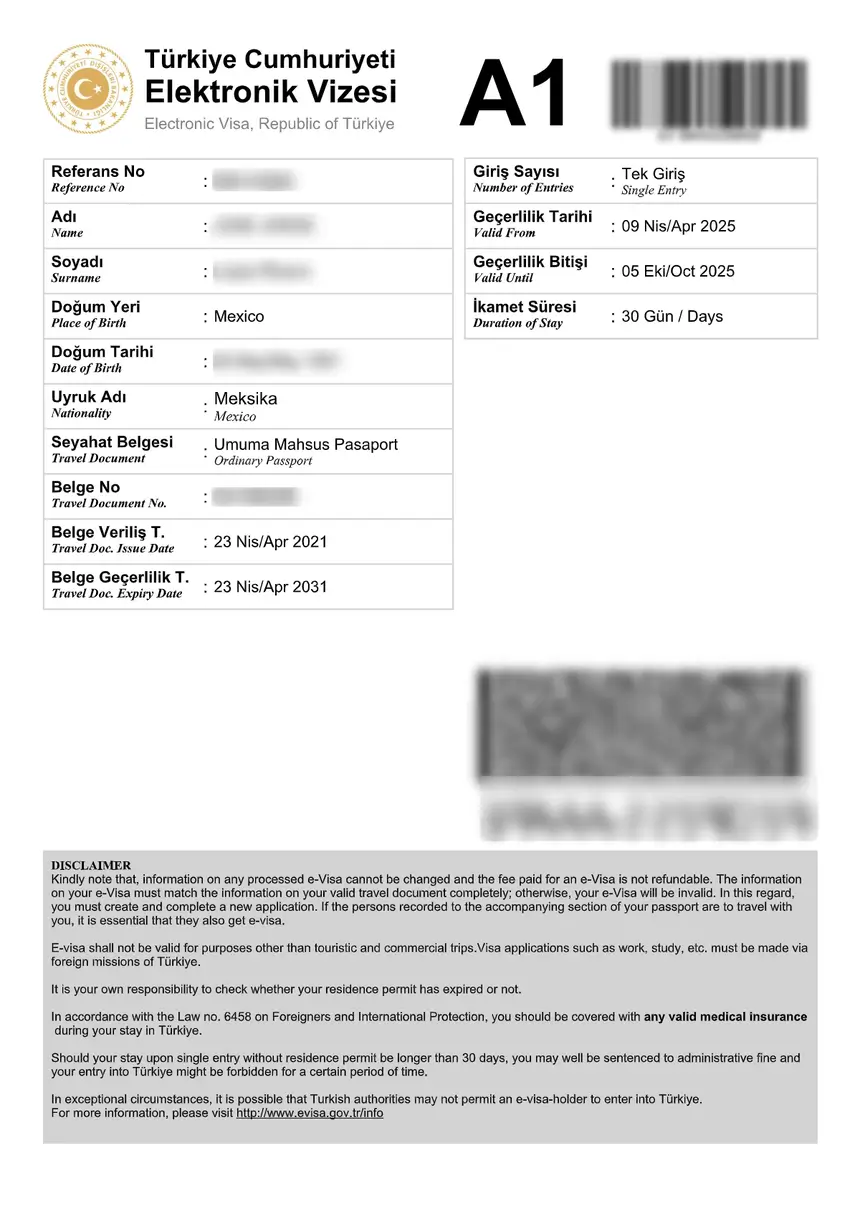
The short answer is no. The Turkey eVisa cannot be extended or renewed while you are in the country. The eVisa is issued for a fixed period – typically 30 or 90 days within a 180-day validity window depending on your nationality – and once it expires, you must leave Turkey.
If you need more time in Turkey beyond your eVisa validity, you have two options:
- Leave Turkey and apply for a new eVisa from outside the country. You can reapply immediately after departure through the official eVisa portal.
- Apply for a residence permit through the Provincial Directorate of Migration Management (Göç İdaresi) before your eVisa expires. This allows you to remain in Turkey legally without leaving.
Learn more about eVisa eligibility, fees, and application steps in our Turkey eVisa guide.
Extending a Sticker Visa (Embassy Visa)
If you entered Turkey on a sticker visa obtained from a Turkish embassy or consulate, extension rules are different from the eVisa. Sticker visas may, in some cases, be extended by the Provincial Directorate of Migration Management (Göç İdaresi) in Turkey.
To apply for a sticker visa extension:
- Visit your local Göç İdaresi office before your current visa expires.
- Bring your passport, a completed application form, proof of financial means, health insurance, and a reason for the extension.
- Pay the applicable fee, which varies depending on your nationality and the length of the extension requested.
- Await a decision. Processing typically takes 5 to 15 business days.
Not all sticker visas are eligible for extension. Whether your visa can be extended depends on the visa type (tourist, business, family, etc.) and bilateral agreements between Turkey and your home country. Contact your local Göç İdaresi office for guidance specific to your situation.
For details on different visa types, see our Turkey tourist visa and Turkey business visa guides.
Turkey Residence Permit: The Proper Way to Extend Your Stay
The most reliable way to extend your stay in Turkey is to apply for a short-term residence permit (İkamet İzni). This is the legal mechanism for foreign nationals who wish to remain in Turkey beyond their visa validity for purposes such as tourism, property ownership, business, medical treatment, or language study.
Who Needs a Residence Permit?
You need a residence permit if:
- Your visa or eVisa is about to expire but you want to stay longer.
- You own property in Turkey and want to reside there.
- You are in Turkey for medical treatment.
- You are conducting scientific research.
- You are enrolled in a Turkish language course (not a full degree program – for that, see the Turkey student visa guide).
- You want to establish a business or invest in Turkey.
How to Apply for a Short-Term Residence Permit
- Apply online through the e-Residence system managed by the Turkish Directorate General of Migration Management.
- Select your appointment date and location at the nearest Provincial Directorate of Migration Management (Göç İdaresi).
- Gather required documents, which typically include:
- Valid passport (with at least 60 days validity beyond your requested stay)
- Biometric photos (4 copies)
- Proof of address in Turkey (rental contract, hotel reservation, or title deed)
- Health insurance valid in Turkey
- Proof of financial means (bank statements showing sufficient funds)
- Tax number (vergi numarası) from the local tax office
- Attend your appointment at the Göç İdaresi office on the scheduled date.
- Receive your residence permit card by mail within 2 to 4 weeks after approval.
Residence Permit Duration and Renewal
- Initial short-term residence permit: Up to 1 year.
- Renewal: You can apply for renewal up to 60 days before your current permit expires.
- Maximum consecutive stay: Short-term residence permits can generally be renewed, but the total consecutive period may be limited depending on your circumstances and nationality.
For work-related stays, you will need a Turkey work visa and work permit instead of a short-term residence permit.
Overstaying Your Turkey Visa: Consequences and Penalties
Overstaying your visa in Turkey is a serious matter. Turkish immigration authorities actively enforce visa violations, and the consequences can affect your ability to return to Turkey in the future.
Fines for Overstaying
If you overstay your visa in Turkey, you will be required to pay an overstay fine (idari para cezası) at the airport or border crossing before you can leave the country. The fine amount depends on:
- How long you overstayed – fines increase with the duration of overstay.
- Your nationality – some nationalities face different penalty structures.
- Whether you have overstayed before – repeat offenders face higher penalties.
Typical overstay fines range from a few hundred to several thousand Turkish Lira. In some cases, the fine may be equivalent to several hundred US dollars.
Deportation Ban (Giriş Yasağı)
In addition to fines, overstaying can result in an entry ban (giriş yasağı) preventing you from returning to Turkey. Entry bans can last:
- Up to 5 years for short overstays (a few weeks to a few months).
- Up to 10 years or more for extended overstays or repeated violations.
If you receive an entry ban, you will be notified at the border when departing Turkey. You can appeal the ban through the Turkish courts or through the Göç İdaresi, but the process can take several months.
How to Avoid Overstaying
- Track your visa validity carefully. Note the exact date your visa or eVisa expires and plan to depart or apply for an extension well in advance.
- Apply for a residence permit early. You can apply for a residence permit while your current visa is still valid. Do not wait until the last day.
- Keep copies of your entry stamp. Your passport entry stamp shows the date you entered Turkey and the number of days you are allowed to stay. This is your primary reference.
Short-Term Visa Extension Alternatives
If you only need a few extra days in Turkey and do not want to go through the full residence permit process, consider these alternatives:
Border Run (Visa Reset)
Some travelers leave Turkey and re-enter to reset their visa period. For eVisa holders, this means:
- Depart Turkey (for example, to Greece, Georgia, or Bulgaria).
- Apply for a new eVisa online.
- Re-enter Turkey with the new eVisa.
Important: Turkey has tightened enforcement of repeated visa runs. If immigration authorities determine that you are using consecutive eVisas to effectively reside in Turkey without a proper residence permit, you may be denied entry. A border run is not a guaranteed solution and should not be relied upon as a long-term strategy.
Transit Visa Considerations
If you are passing through Turkey and need a brief extension, a Turkey transit visa may be relevant. Transit visas are designed for travelers connecting through Turkey to a third country and typically allow stays of up to 72 hours.
Turkey Visa Extension by Nationality
Extension rules and residence permit requirements can vary based on your nationality. Here are some key points for common nationalities:
US Citizens
- eVisa: $50 USD, 90 days within 180 days, multiple entry. Cannot be extended.
- Residence permit: US citizens can apply for a short-term residence permit through the standard process.
- Overstay fine: Significant fines plus potential entry ban.
UK Citizens
- eVisa: $20 USD, 90 days within 180 days, multiple entry. Cannot be extended.
- Residence permit: UK citizens follow the standard residence permit process after Brexit.
EU/Schengen Citizens
- Many EU citizens can enter Turkey visa-free for up to 90 days within 180 days.
- For stays beyond 90 days, a residence permit is required.
Canadian Citizens
- eVisa: $60 USD, 90 days within 180 days, multiple entry. Cannot be extended.
- Residence permit: Standard application process applies.
For a full breakdown of fees and requirements by nationality, see our Turkey eVisa requirements and Turkey eVisa fee guides.
Processing Time for Visa Extensions and Residence Permits
The processing time depends on the type of application:
- eVisa reapplication: Instant (online approval within minutes).
- Sticker visa extension: 5 to 15 business days.
- Short-term residence permit: 2 to 4 weeks after appointment.
- Residence permit card delivery: Additional 2 to 4 weeks by mail.
During peak travel season (June through September), processing times may be longer. Apply as early as possible to avoid gaps in your legal status.
For more details on processing times, see our Turkey visa processing time guide.
Frequently Asked Questions
Can I extend my Turkey eVisa without leaving the country?
No. The Turkey eVisa cannot be extended or renewed from within Turkey. You must either leave the country and apply for a new eVisa, or apply for a residence permit before your eVisa expires.
What happens if I overstay my Turkey visa?
You will face an overstay fine at the border and may receive an entry ban of up to 5 years or longer. Overstaying is actively enforced by Turkish immigration authorities.
How do I apply for a Turkey residence permit?
Apply online through the e-Residence system at e-ikamet.goc.gov.tr, schedule an appointment at your local Göç İdaresi office, and bring the required documents including your passport, photos, proof of address, health insurance, and proof of financial means.
Can I work in Turkey on a residence permit?
No. A short-term residence permit does not authorize employment. To work in Turkey, you need a Turkey work visa and a work permit issued by the Ministry of Labor and Social Security.
How early should I apply for a visa extension?
Apply at least 2 to 4 weeks before your current visa or eVisa expires. For residence permits, you can apply up to 60 days before your current permit expires for renewal.
Can I do a visa run to reset my Turkey eVisa?
While technically possible, Turkey has cracked down on repeated visa runs. If authorities determine you are using consecutive eVisas to reside in Turkey without proper authorization, you may be denied entry.