

A Turkey transit visa allows travelers passing through Turkey to change planes or enter the country briefly without obtaining a full tourist or business visa. Whether you need one depends on your nationality, the length of your layover, and whether you plan to leave the airport’s international transit zone.
What Is a Turkey Transit Visa?
A Turkey transit visa is a short-stay travel document that permits foreign nationals to pass through Turkish territory – typically by air – on their way to a final destination in another country. It is required for citizens of certain nationalities who have a layover at a Turkish airport and need to leave the international transit area, change airports, or stay overnight between connecting flights.
Key characteristics of the Turkey transit visa:
- Intended for pass-through travel only – it does not authorize tourism, business meetings, or employment in Turkey.
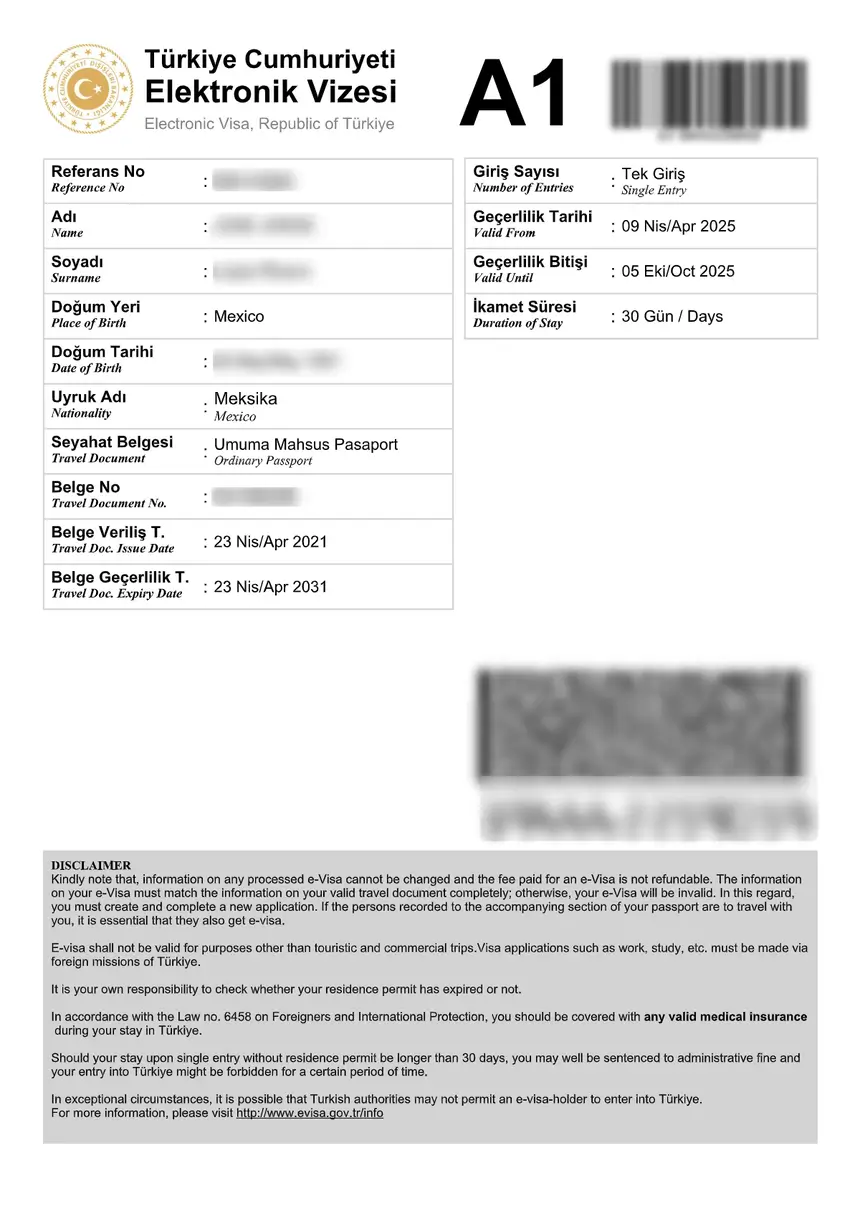
- Not the same as an eVisa – Turkey’s electronic visa (eVisa) at evisa.gov.tr is designed for tourism and commercial visits, not transit. Some travelers may use the eVisa for transit purposes, but the two serve different legal functions.
- Validity is limited – a transit visa typically allows a stay of up to 72 hours, depending on the specific visa issued.
- May not be required for all nationalities – citizens of many countries can transit through Turkey without any visa as long as they remain in the international transit zone.
Who Needs a Turkey Transit Visa?
Not every traveler passing through Turkey needs a transit visa. The requirement depends on three factors: your nationality, whether you leave the international transit zone, and the length of your layover.
Citizens Who Do NOT Need a Transit Visa
Travelers from the following categories generally do not need a transit visa for Turkey:
- Citizens of visa-exempt countries – over 70 nationalities can enter Turkey without a visa for short stays. These travelers do not need a transit visa even if they leave the airport. Examples include citizens of Germany, France, the United Kingdom, Brazil, Japan, South Korea, and most EU/EEA countries.
- Holders of a valid Turkish visa or residence permit – if you already hold a valid sticker visa, eVisa, or residence permit for Turkey, no separate transit visa is needed.
- Travelers remaining in the international transit zone – if your layover is short, you do not need to collect and re-check luggage, and you stay within the designated international transit area of the airport, you typically do not need a transit visa regardless of nationality.
Citizens Who DO Need a Transit Visa
Citizens of certain countries require a transit visa even if they are only passing through Turkey. These are generally nationalities that require a sticker visa to enter Turkey and are not eligible for the eVisa system. This includes citizens of countries such as:
- India
- Pakistan
- Bangladesh
- Nepal
- Sri Lanka
- Nigeria
- Ghana
- Egypt (for non-eVisa eligible purposes)
- Philippines (for non-eVisa eligible situations)
If you are a citizen of a country that requires a sticker visa to enter Turkey, you will likely need a transit visa if you plan to leave the international transit zone during your layover.
| Situation | Transit Visa Required? |
|---|---|
| Layover under 24 hours, staying in transit zone | No (most nationalities) |
| Layover with airport change (e.g., IST to SAW) | Yes (visa-required nationalities) |
| Overnight layover, leaving airport | Yes (visa-required nationalities) |
| Connecting flight, same airport, no baggage claim | No |
| Visa-exempt nationality, any layover duration | No |
| eVisa-eligible nationality with valid eVisa | No |
Turkey Transit Visa vs. eVisa
Many travelers confuse the Turkey transit visa with the Turkey eVisa. Understanding the difference is important to avoid problems at the airport.
| Feature | Transit Visa | eVisa |
|---|---|---|
| **Purpose** | Pass through Turkey en route to another country | Tourism or commercial visit to Turkey |
| **Where to apply** | Turkish embassy or consulate | Online at evisa.gov.tr |
| **Eligible nationalities** | Visa-required nationalities | 100+ countries |
| **Maximum stay** | Up to 72 hours (transit) | Up to 90 days within 180 days |
| **Fee** | Varies by nationality (typically $20-$80 USD) | $20-$60 USD depending on nationality |
| **Processing time** | 5-15 business days | Minutes to 24 hours |
If you are eligible for the eVisa, it is often simpler to obtain one rather than applying for a transit visa. The eVisa covers transit through Turkey as well, since it authorizes entry into the country. For example, a US citizen with a valid eVisa does not need a separate transit visa – the eVisa itself covers any transit or short-term stay.
If you are NOT eligible for the eVisa (for example, Indian or Pakistani citizens), you must apply for a transit visa at a Turkish embassy or consulate before your trip.
How to Apply for a Turkey Transit Visa
The application process for a Turkey transit visa is handled through Turkish embassies and consulates. There is no online application option for transit visas – unlike the eVisa, which is fully electronic.
Step 1: Determine If You Need a Transit Visa
Before applying, confirm whether your nationality requires a transit visa. Check the following:
- Are you eligible for Turkey’s eVisa? If yes, you can use the eVisa instead.
- Will you remain in the international transit zone? If yes, you may not need any visa.
- Does your airline require you to collect and re-check baggage? If yes, you will likely need to pass through immigration, which requires a visa.
Step 2: Gather Required Documents
To apply for a Turkey transit visa, you will typically need:
- Valid passport – with at least 6 months of remaining validity and at least one blank page.
- Completed visa application form – available through the Turkish government’s Pre-Application System at visa.gov.tr.
- Passport-sized photographs – two biometric photos (5 cm × 6 cm) with a white background, taken within the last six months.
- Confirmed onward flight ticket – showing your final destination and proving that you are transiting through Turkey.
- Visa for your final destination – if required by the country you are traveling to.
- Proof of accommodation – if your layover is overnight, you may need a hotel reservation.
- Travel insurance – covering the duration of your transit through Turkey.
- Visa fee payment – the fee varies by nationality and consulate.
Step 3: Submit Your Application
Complete the online pre-application at visa.gov.tr and schedule an appointment at the nearest Turkish embassy or consulate. Bring all original documents and photocopies to your appointment.
Step 4: Wait for Processing
Transit visa processing typically takes 5 to 15 business days, though it can take longer during peak travel seasons. Apply well in advance of your travel date – ideally at least 3 to 4 weeks before departure.
Step 5: Collect Your Visa
Return to the embassy or consulate to collect your passport with the transit visa sticker, or arrange for courier delivery if available.
Transit at Istanbul Airport (IST)
Istanbul Airport is Turkey’s primary international hub and one of the busiest airports in the world. If you are transiting through Istanbul Airport, here is what you need to know:
- International transit zone – Istanbul Airport has a well-equipped international transit area with lounges, restaurants, duty-free shops, and rest areas. If your layover is under 24 hours and you stay within this zone, you generally do not need a transit visa.
- Layover services – Turkish Airlines offers a free hotel stay for passengers with layovers of 12 hours or more on international connecting flights (subject to availability and fare class). This is called the Touristanbul program and includes free city tours as well.
- Changing terminals – Istanbul Airport operates from a single terminal building, so you do not need to leave the secure area for most connections.
- Minimum connection time – the minimum connecting time at Istanbul Airport is typically 60 minutes for international-to-international flights on the same booking.
Transit at Sabiha Gökçen Airport (SAW)
Istanbul’s second airport, Sabiha Gökçen (SAW), is located on the Asian side of the city. Some budget carriers and regional flights operate from this airport.
- If you are connecting between IST and SAW – this requires leaving one airport and traveling to the other. You will need a valid visa (eVisa or transit/sticker visa) to pass through Turkish immigration.
- The distance between IST and SAW is approximately 80 km (50 miles). Travel time is 1.5 to 2.5 hours depending on traffic.
- Transfer options include the Havaist airport bus, taxi, or private transfer. There is no direct rail connection between the two airports.
Transit at Ankara Esenboğa Airport (ESB)
Ankara’s Esenboğa Airport handles a smaller volume of international traffic but serves as a transit point for some regional flights. The same visa rules apply – if you need to leave the international transit zone, you need a valid visa.
Turkey Transit Visa Fees
Transit visa fees vary by nationality and are set by the Turkish Ministry of Foreign Affairs. Typical fees range from $20 to $80 USD, though some nationalities may pay more or less. Payment methods differ by consulate – some accept only cash, while others accept credit cards or bank transfers.
For comparison, here are some Turkey eVisa fees for reference:
| Nationality | eVisa Fee | Transit Visa Fee (approximate) |
|---|---|---|
| United States | $50 USD | Not required (use eVisa) |
| United Kingdom | $20 USD | Not required (visa-exempt) |
| Canada | $60 USD | Not required (use eVisa) |
| India | Not eligible for eVisa | $50-$80 USD |
| Pakistan | Not eligible for eVisa | $50-$80 USD |
| Nigeria | Not eligible for eVisa | $50-$80 USD |
Common Questions About Turkey Transit Visa
Can I leave the airport during a layover in Turkey?
Yes, but only if you hold a valid visa. If you are from a visa-exempt country, you can leave the airport freely. If you are from an eVisa-eligible country, you can use your eVisa to exit the airport. If you require a sticker visa, you must have a transit visa or a regular visa to leave the international transit zone.
How long can I stay in Turkey with a transit visa?
A transit visa typically allows a stay of up to 72 hours. This is intended to cover short layovers, not extended stays. If you need to stay longer, you should apply for a regular tourist visa or eVisa.
Do I need a transit visa if I am flying Turkish Airlines?
The airline does not determine visa requirements – your nationality and travel plans do. However, Turkish Airlines does offer layover services (hotel stays and city tours) for passengers with long connections, which may require you to leave the airport and therefore need a valid visa.
Can I apply for a Turkey transit visa online?
No. Transit visas must be obtained from a Turkish embassy or consulate before travel. If you are eligible for the eVisa, you can apply for that online at evisa.gov.tr and use it for transit purposes.
What happens if I overstay a transit visa?
Overstaying any Turkish visa can result in fines, deportation, and a ban from re-entering Turkey. Penalties depend on the length of overstay – short overstays may result in a fine and a temporary entry ban, while longer overstays can lead to a multi-year ban and deportation at your own expense.
Is a transit visa the same as an airport transit visa?
Yes, the terms are used interchangeably. Turkey’s transit visa (also called an “airport transit visa” in some contexts) allows travelers to pass through Turkish territory on their way to another country.
Tips for a Smooth Transit Through Turkey
- Check your visa status before booking – confirm whether your nationality requires a transit visa or if you are eligible for the eVisa or visa-free entry.
- Book connecting flights on the same ticket – when both flights are on the same booking, your baggage is usually transferred automatically, and you do not need to pass through immigration.
- Allow enough connection time – at Istanbul Airport, allow at least 90 minutes for international connections, especially during peak hours.
- Keep your documents accessible – have your passport, visa (if required), and boarding passes readily available during your transit.
- Use the Touristanbul program – if you have a long layover on Turkish Airlines, take advantage of the free hotel stay or city tour offered by the airline.
For the most up-to-date information on Turkey transit visa requirements, visit the official Turkish Ministry of Foreign Affairs website at mfa.gov.tr or the Turkish eVisa portal at evisa.gov.tr.